The discoveries shaping what AI can do next, explained in plain words. Find out what scientists learned, how solid the result is, and when it might show up in your life.
Graphic: Plot · Data: TechCrunch
Research
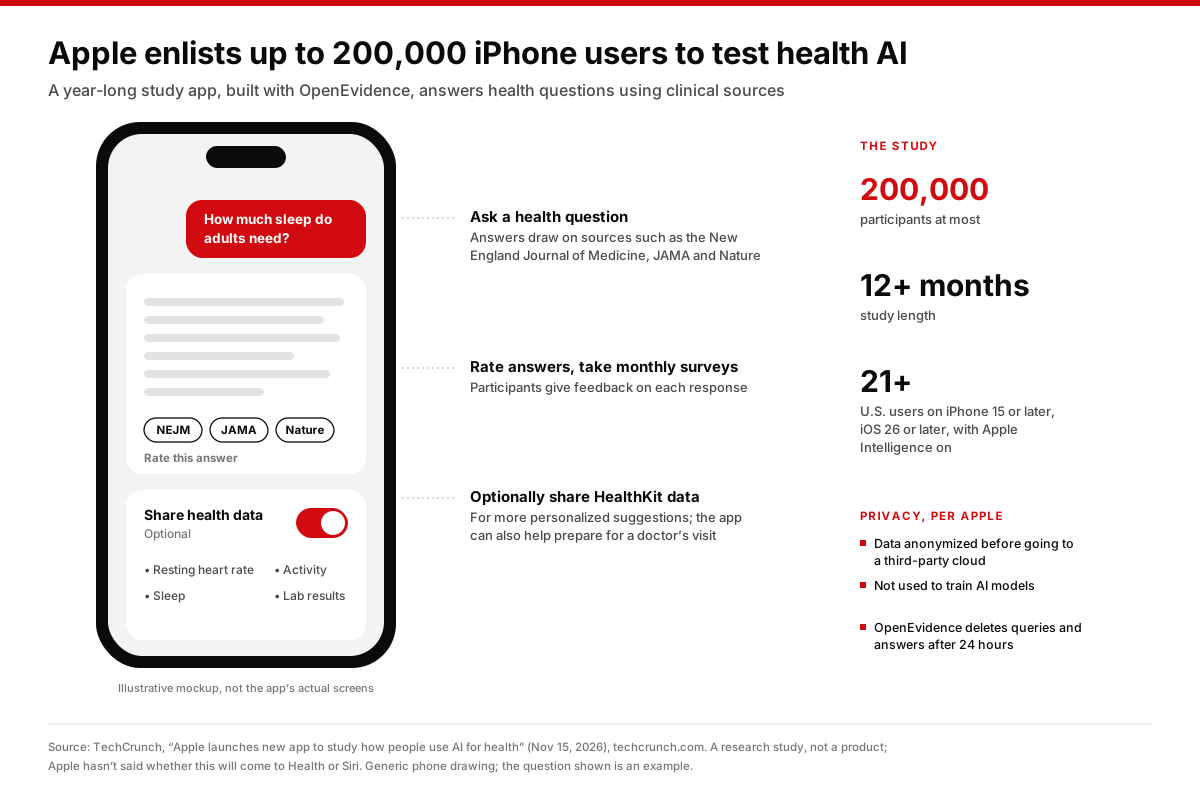
A year-long study with OpenEvidence lets US adults ask health questions, get cited answers and optionally share HealthKit data.
Why it matters A study, not a product; results are a year off, and Apple hasn't said whether this goes into Health or Siri.
Source: TechCrunch · Nov 15, 2026
Graphic: Plot · Data: Google Research blog (self-reported)
Research
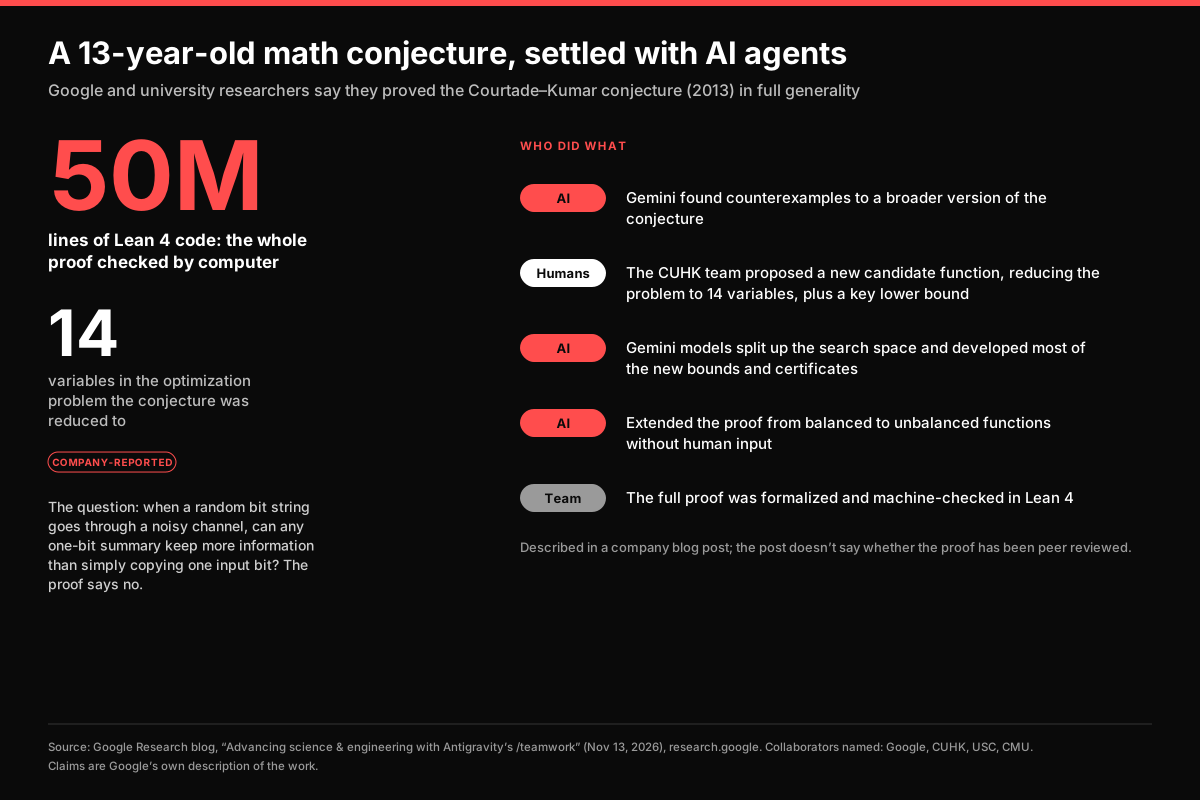
Google says its Gemini agent teams, working with academics, proved the Courtade-Kumar conjecture and checked big proofs line by line by computer.
Why it matters Company blog; proofs are machine-checked in Lean, but most results still await peer review and humans framed the problems.
Source: Google Research · Nov 13, 2026
Graphic: Plot · Data: Nature (news)
Research
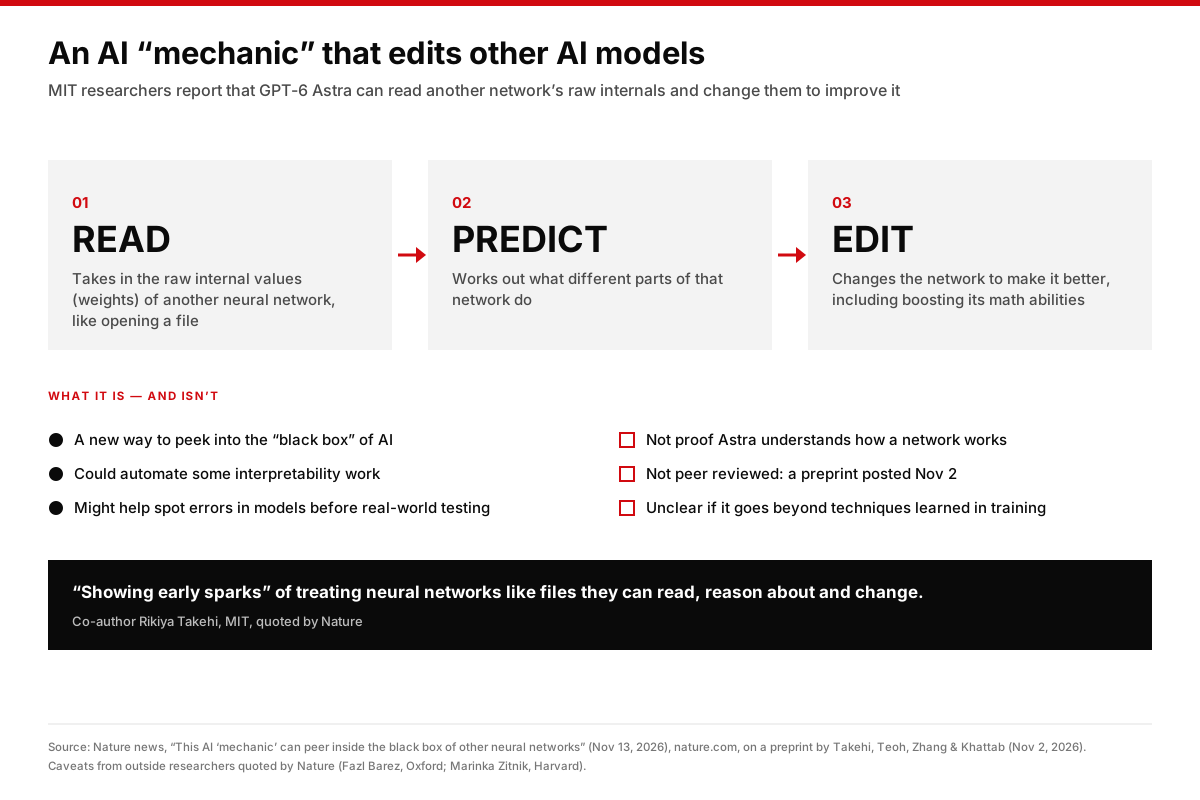
MIT researchers report that OpenAI's GPT-6 Astra can read another network's raw internals, predict what parts do, and edit them to improve it.
Why it matters Preprint only, not peer reviewed; outside experts say it's unclear the model truly understands the networks it edits.
Source: Nature · Nov 13, 2026
Graphic: Plot · Data: MIT News (self-reported)
Research
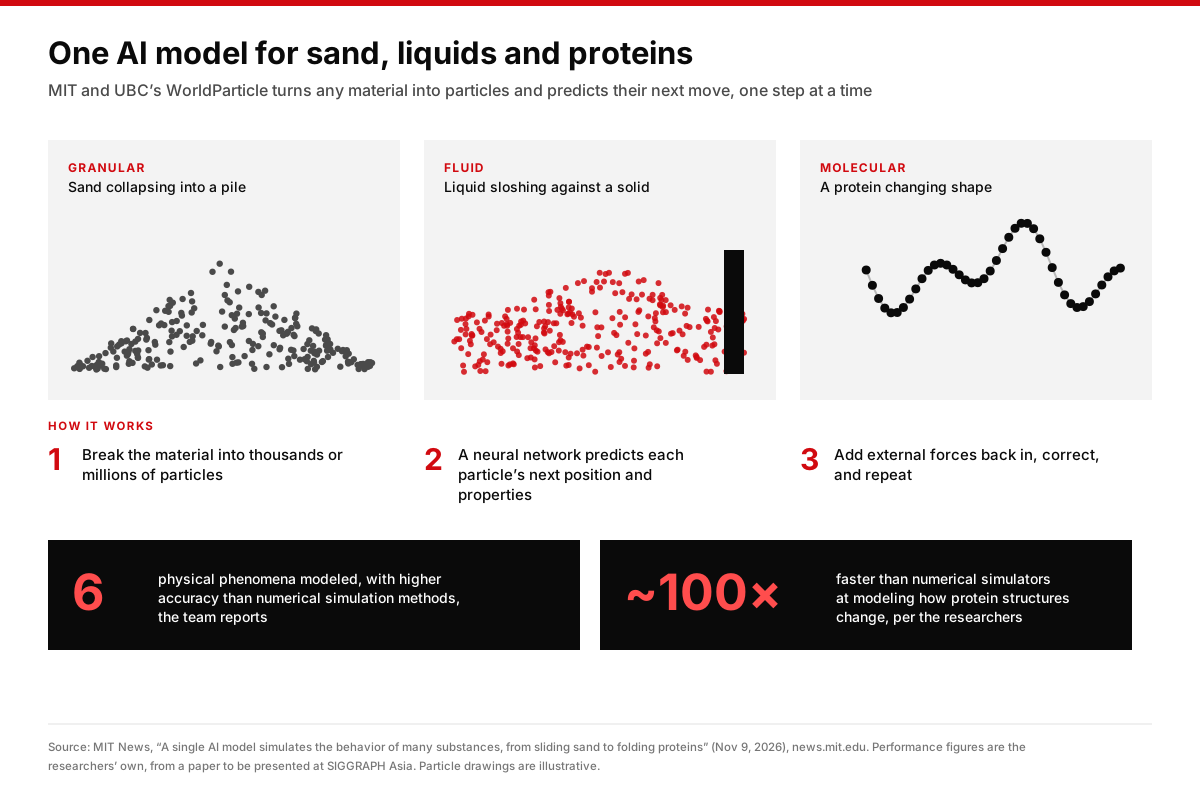
MIT's WorldParticle predicts how particles move step by step, replacing many hand-built physics simulators with a single model.
Why it matters University research headed to a conference; accuracy shown on six test cases, real-world engineering use is still ahead.
Source: MIT News · Nov 9, 2026