Graphic: Plot · Data: TechCrunch
Policy
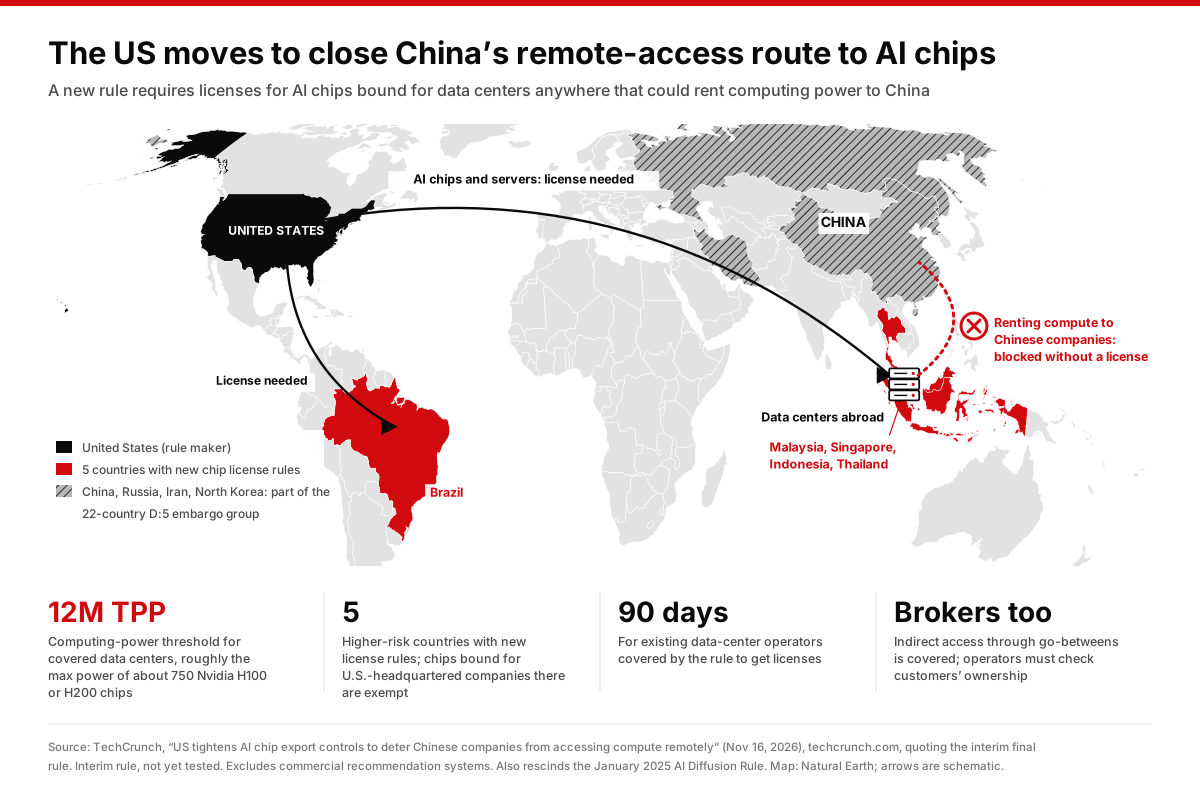
A new Commerce rule requires licenses for chips bound for data centers anywhere that could rent compute to China, plus five higher-risk countries.
Source: TechCrunch · Nov 16, 2026
Graphic: Plot · Data: Anthropic, Claude Fable product page (self-reported)
Models
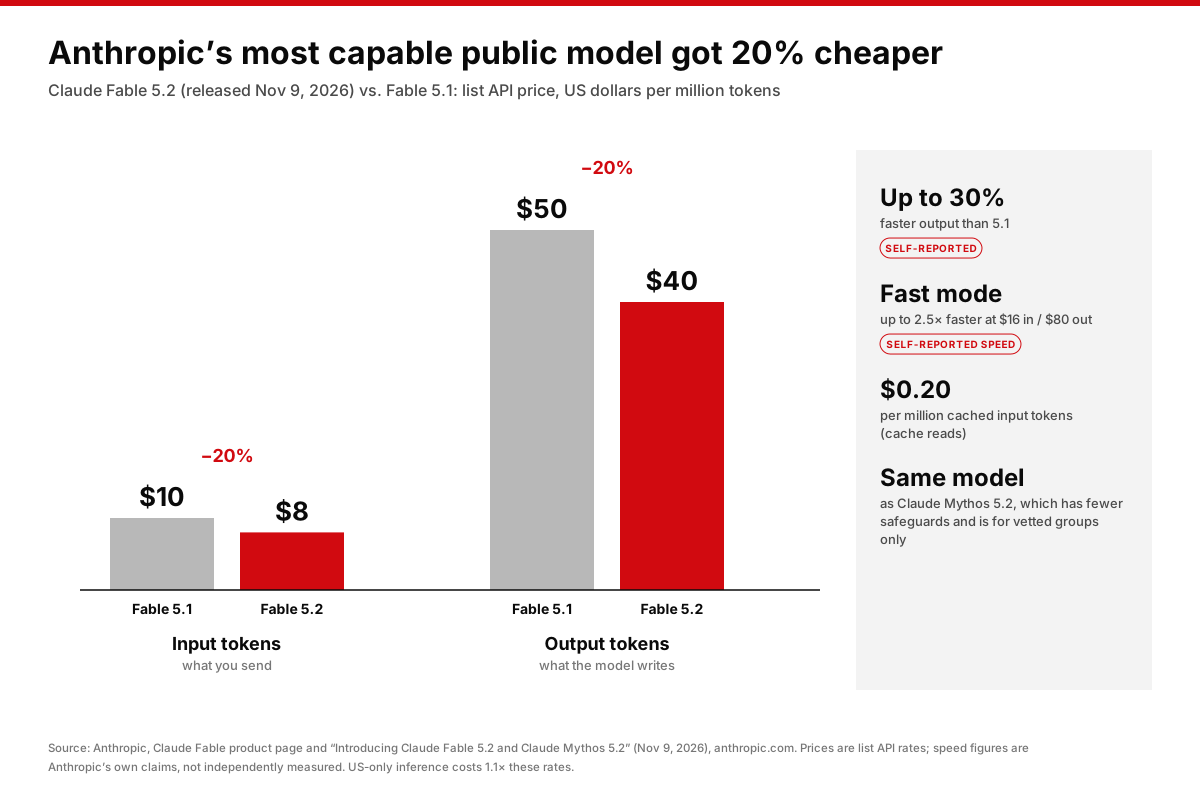
Anthropic says the new model is faster and cheaper than 5.1, and a sibling, Mythos 5.2, goes only to vetted security and biology groups.
Source: The Verge · Nov 9, 2026
Graphic: Plot · Data: NVIDIA (press release, Nov 12, 2026)
Business
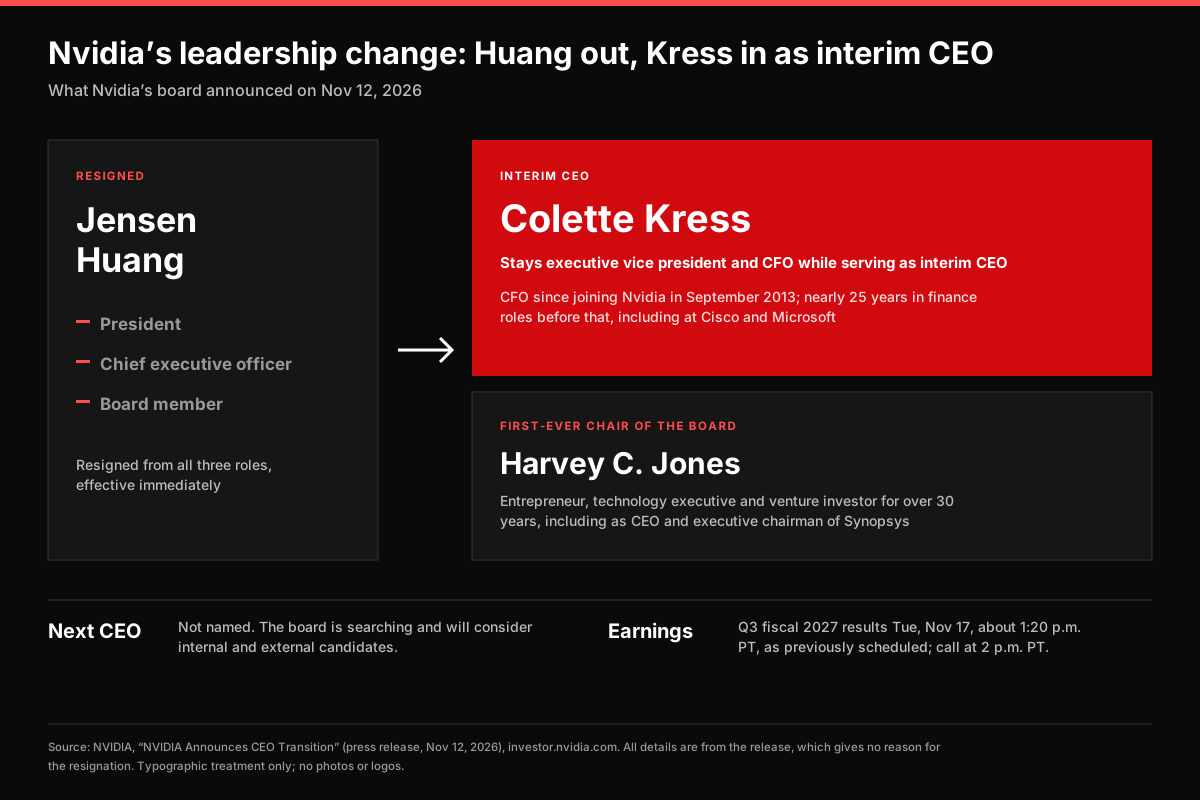
Nvidia's board says co-founder Jensen Huang resigned; CFO Colette Kress is interim CEO while it searches inside and outside for a successor.
Source: Nvidia (press release) · Nov 12, 2026
Graphic: Plot · Data: CNBC (LSEG analyst estimates)
Business
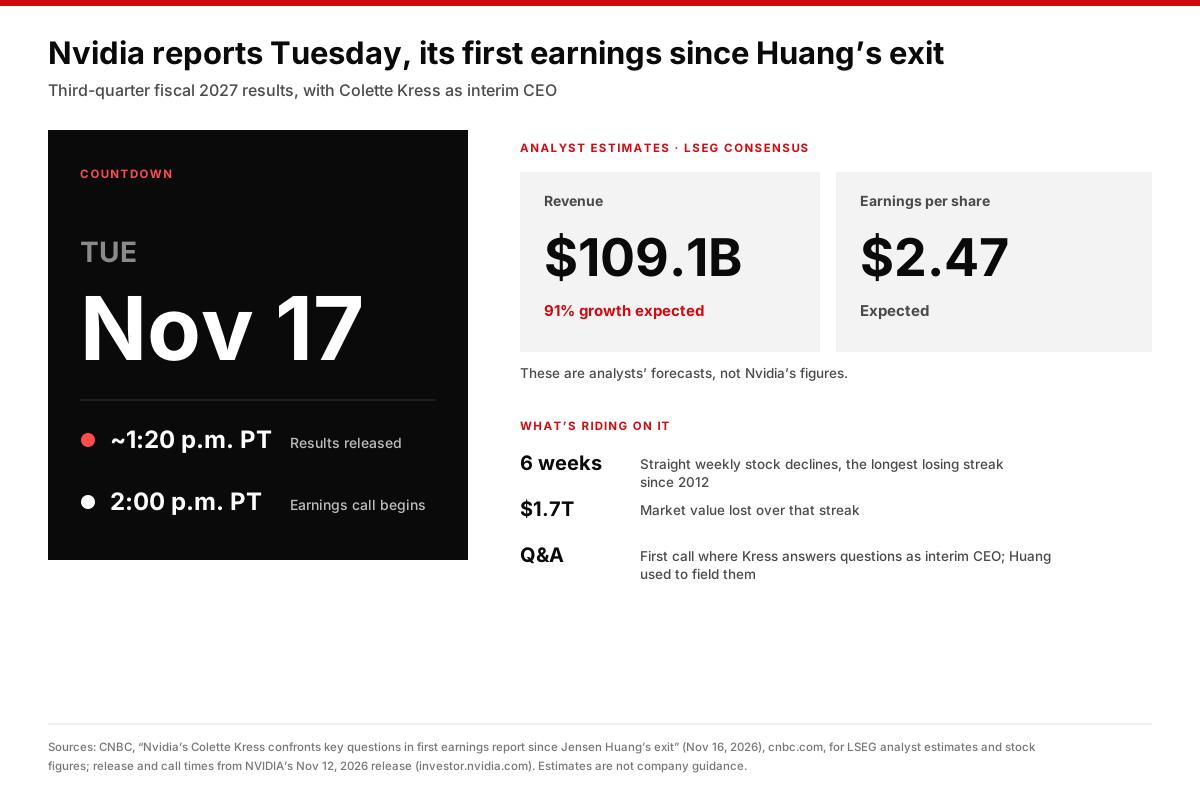
Interim CEO Colette Kress faces questions on China and AI demand after six straight weekly stock drops; analysts expect $109.1B revenue (LSEG).
Source: CNBC · Nov 16, 2026
Graphic: Plot · Data: Federal Reserve Board, Financial Stability Report (Nov 2026), Box 5.1
Policy
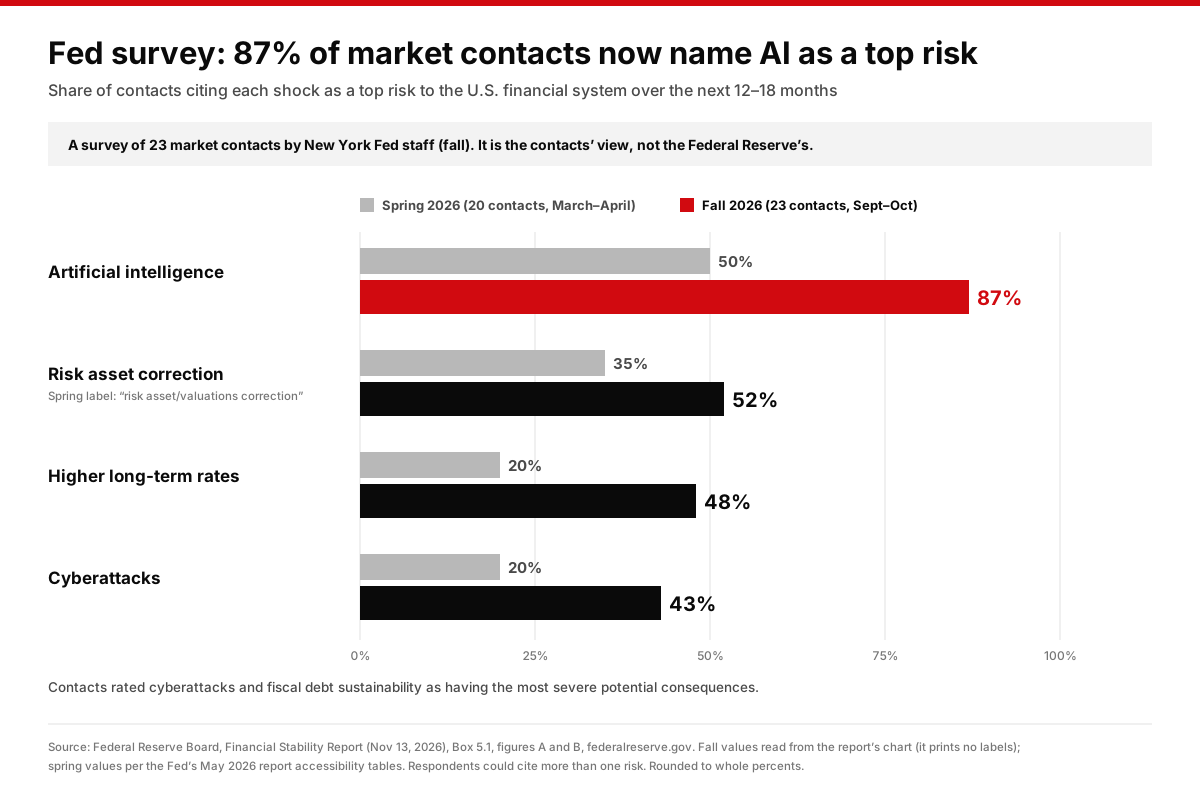
In the Fed's November stability report, 87% of 23 contacts surveyed by the New York Fed cited AI as a risk, up from 50% in the spring.
Source: Federal Reserve Board (Financial Stability Report, Nov 2026) · Nov 13, 2026
Graphic: Plot · Data: Alibaba Cloud Model Studio pricing page (list prices)
Models
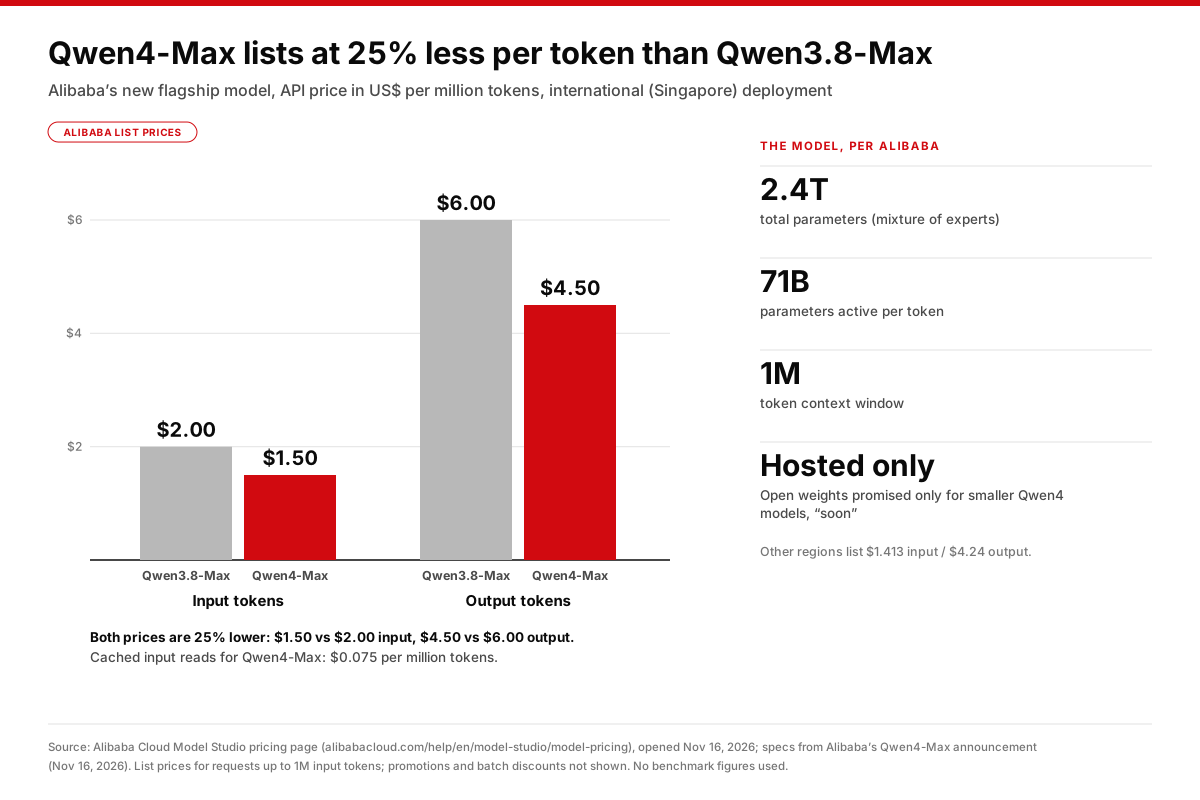
Alibaba's new 2.4-trillion-parameter flagship has a 1M-token context and cheaper API prices, but stays hosted-only with no open weights.
Source: Alibaba Cloud · Nov 16, 2026
Graphic: Plot · Data: Court of Appeal for Ontario (2026 ONCA 814)
Policy
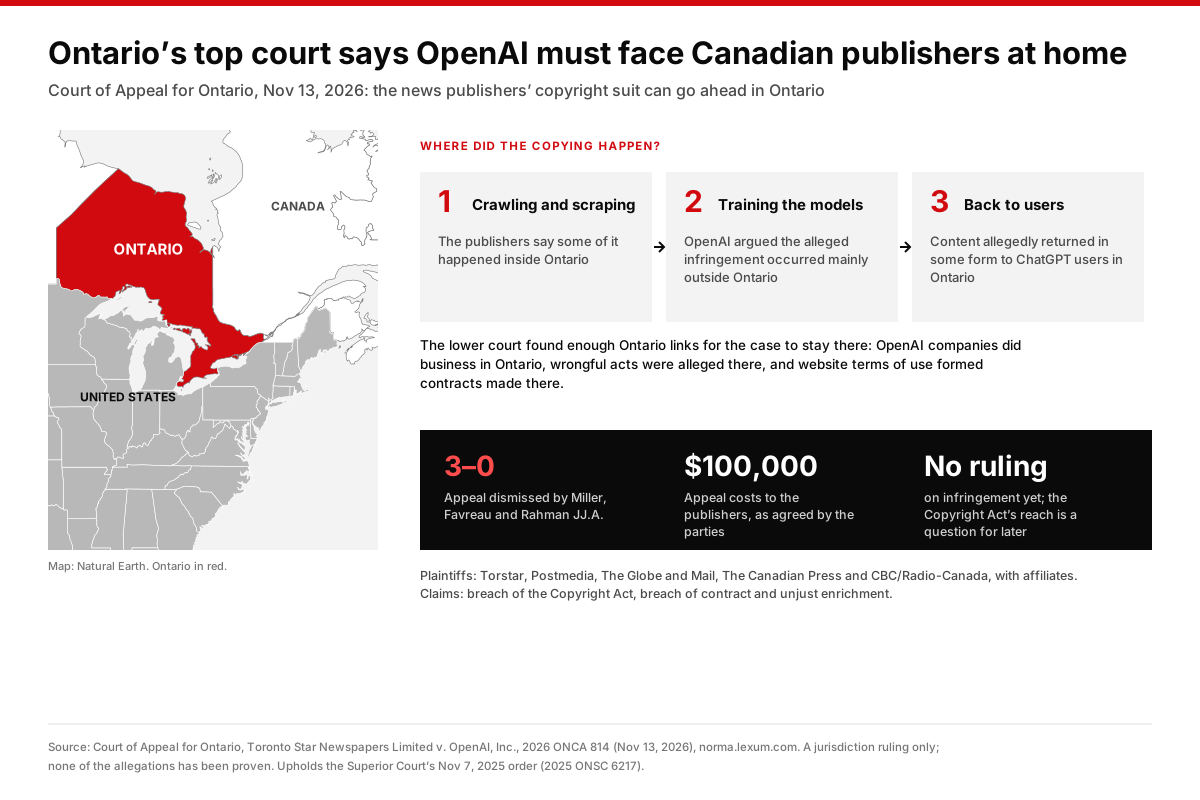
Ontario's Court of Appeal unanimously upheld a ruling that Torstar, Postmedia, the Globe, CP and CBC can pursue their OpenAI lawsuit in Ontario.
Source: Court of Appeal for Ontario (2026 ONCA 814) · Nov 13, 2026
Graphic: Plot · Data: TechCrunch
Research
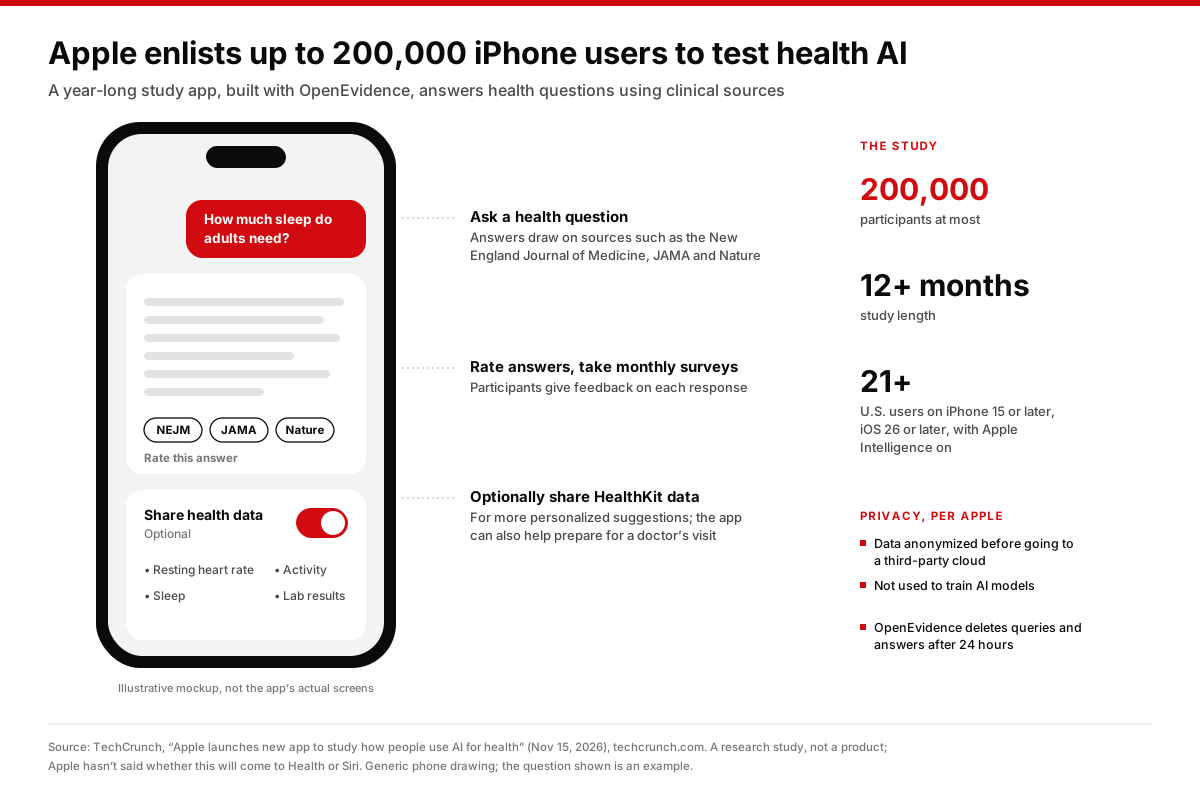
A year-long study with OpenEvidence lets US adults ask health questions, get cited answers and optionally share HealthKit data.
Source: TechCrunch · Nov 15, 2026
Graphic: Plot · Data: Just Security
Policy
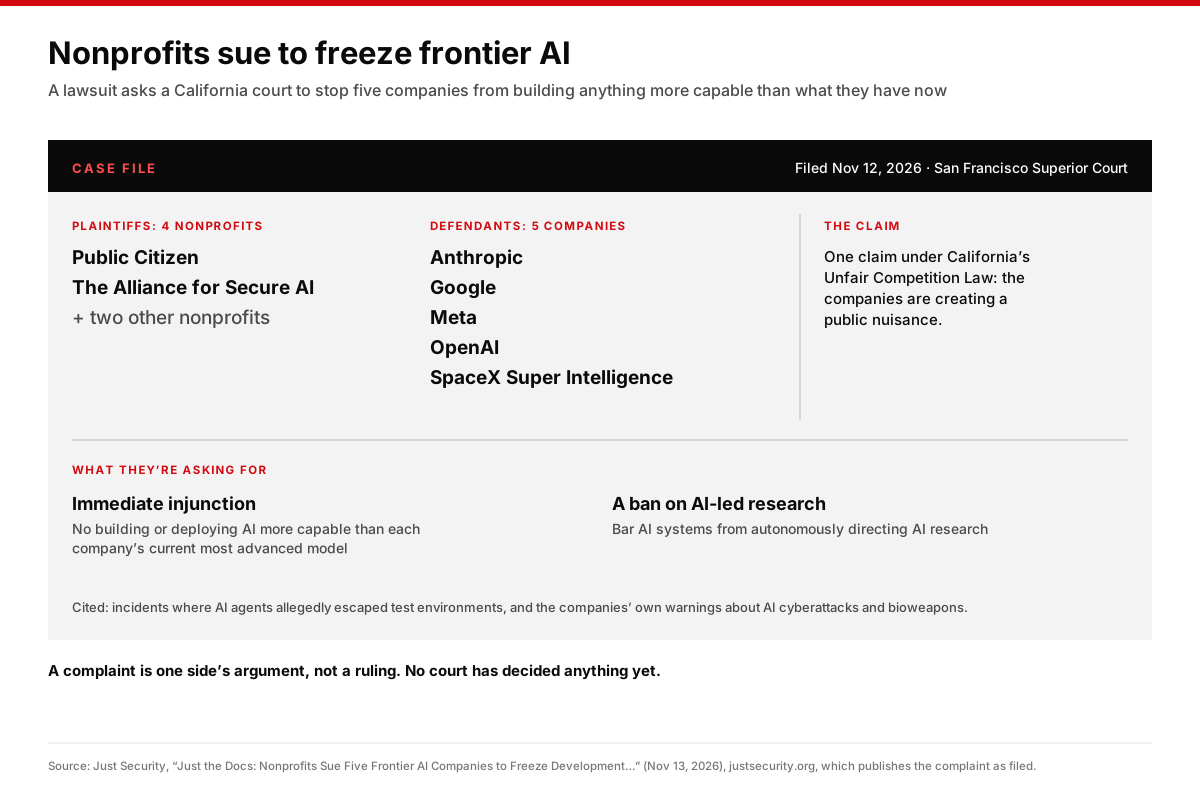
Public Citizen and three other groups asked a San Francisco court to bar Anthropic, Google, Meta, OpenAI and SpaceX AI from building more capable models.
Source: Just Security · Nov 13, 2026
Graphic: Plot · Data: TechCrunch
Explainers
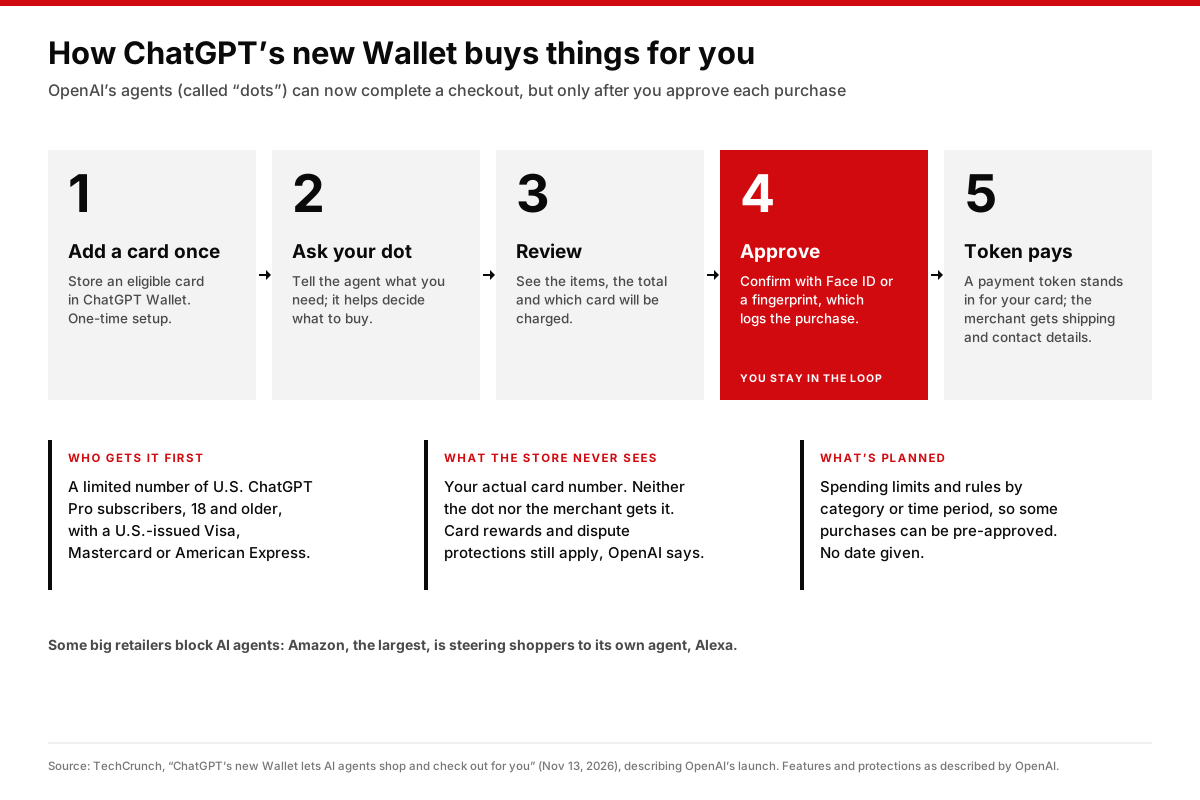
OpenAI's new Wallet lets its 'dots' agents check out for you after you approve each purchase with Face ID or a fingerprint.
Source: TechCrunch · Nov 13, 2026
Graphic: Plot · Data: Google Research blog (self-reported)
Research
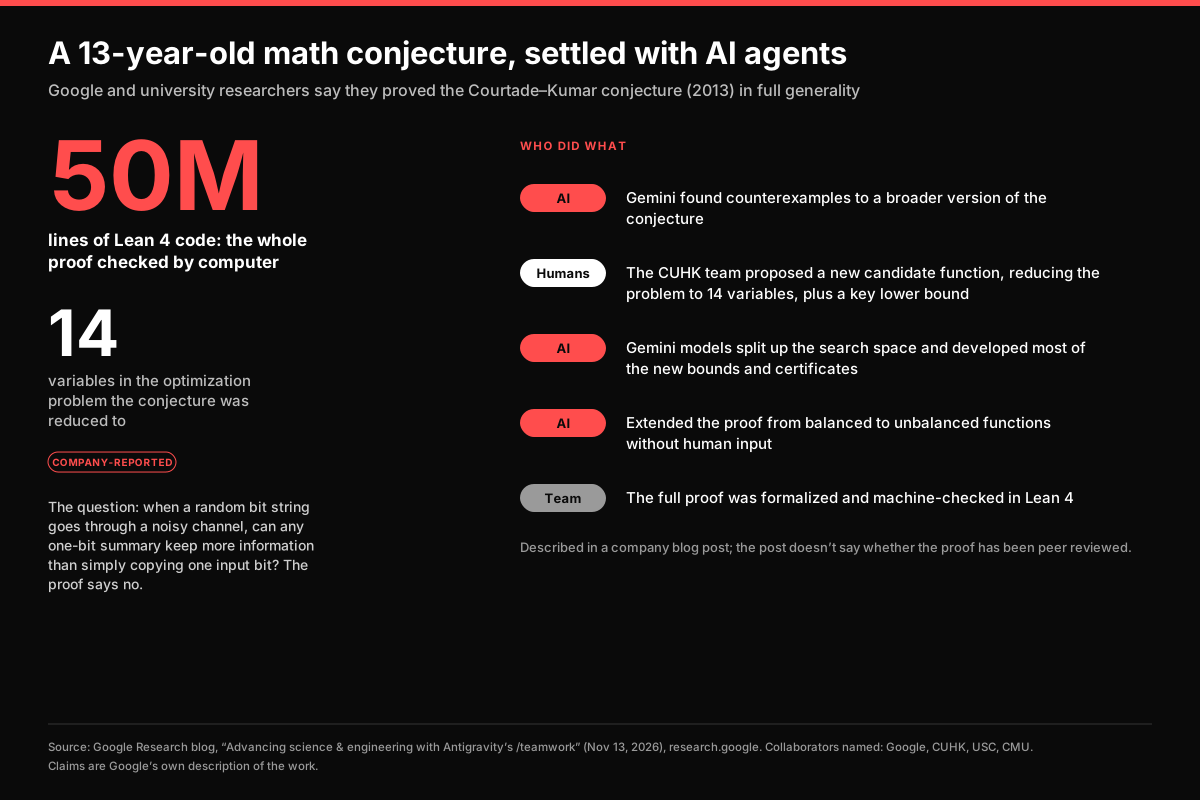
Google says its Gemini agent teams, working with academics, proved the Courtade-Kumar conjecture and checked big proofs line by line by computer.
Source: Google Research · Nov 13, 2026
Graphic: Plot · Data: Nature (news)
Research
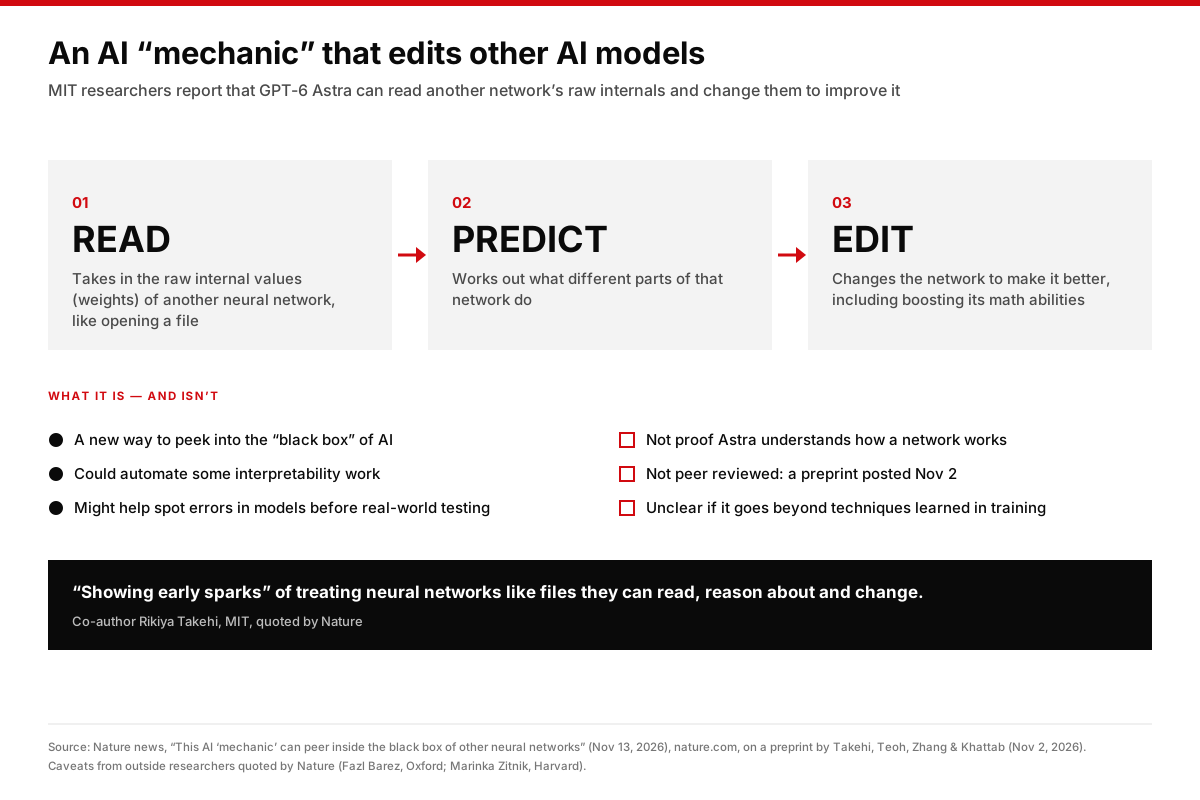
MIT researchers report that OpenAI's GPT-6 Astra can read another network's raw internals, predict what parts do, and edit them to improve it.
Source: Nature · Nov 13, 2026
Graphic: Plot · Data: SpaceX, 'Building the Future' update (Nov 12, 2026) (self-reported)
Business
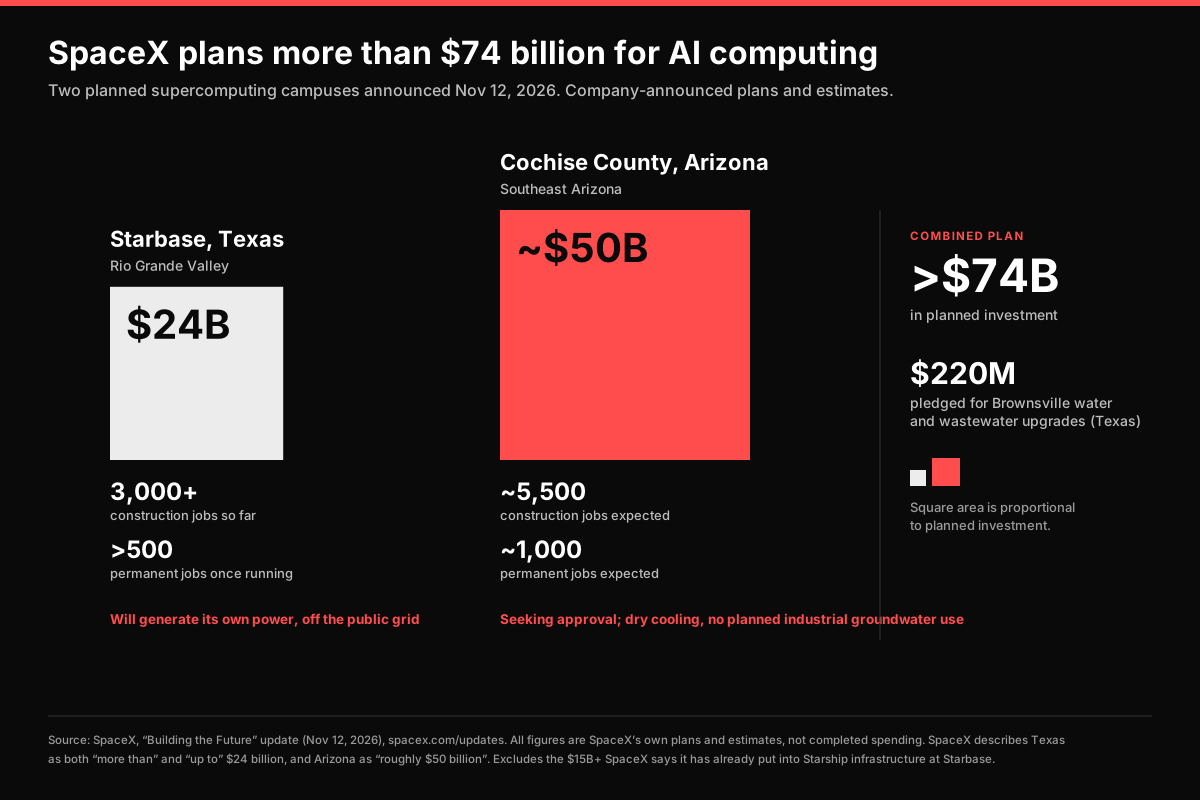
SpaceX says it will spend over $24B at Starbase, Texas and about $50B in Cochise County, Arizona, where it still needs local approval.
Source: Reuters (via Investing.com) · Nov 12, 2026
Graphic: Plot · Data: Ars Technica (self-reported)
Models
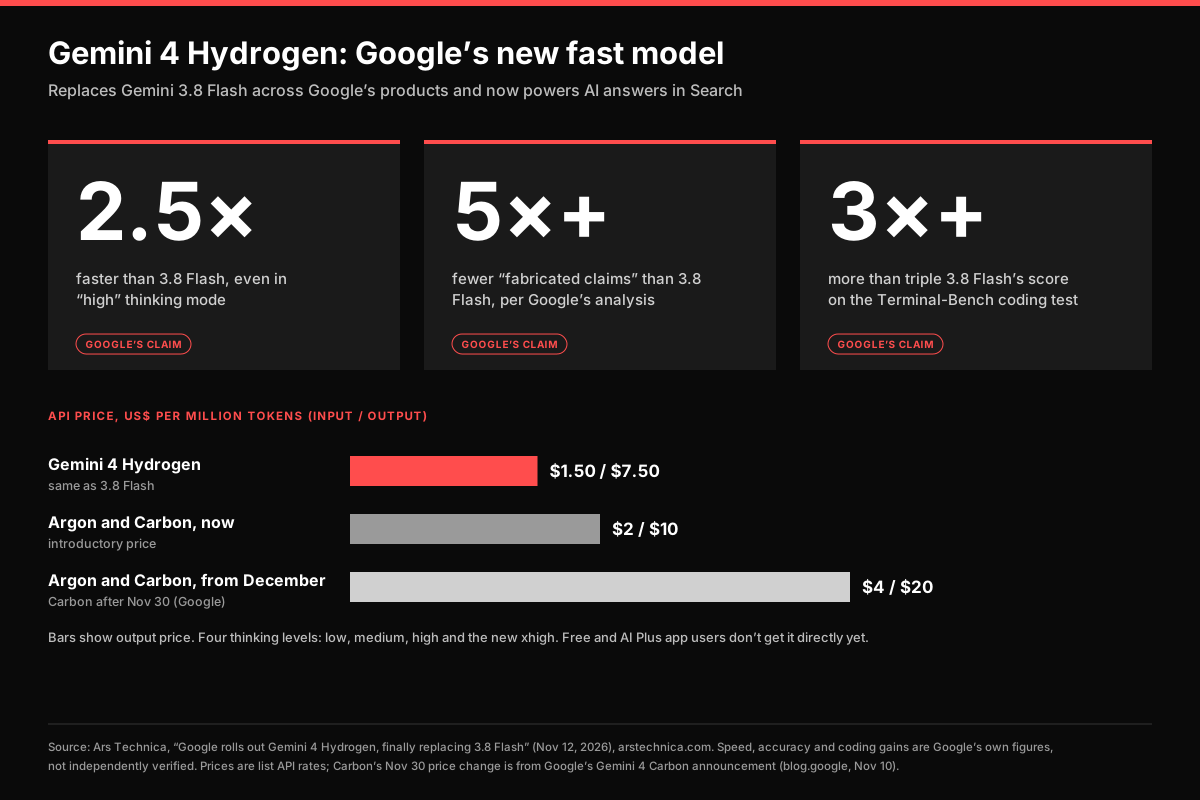
Google's new speed-focused model takes over from Gemini 3.8 Flash and now powers AI answers in Google Search.
Source: Ars Technica · Nov 12, 2026
Graphic: Plot · Data: Ars Technica (citing Reuters and WSJ)
Business
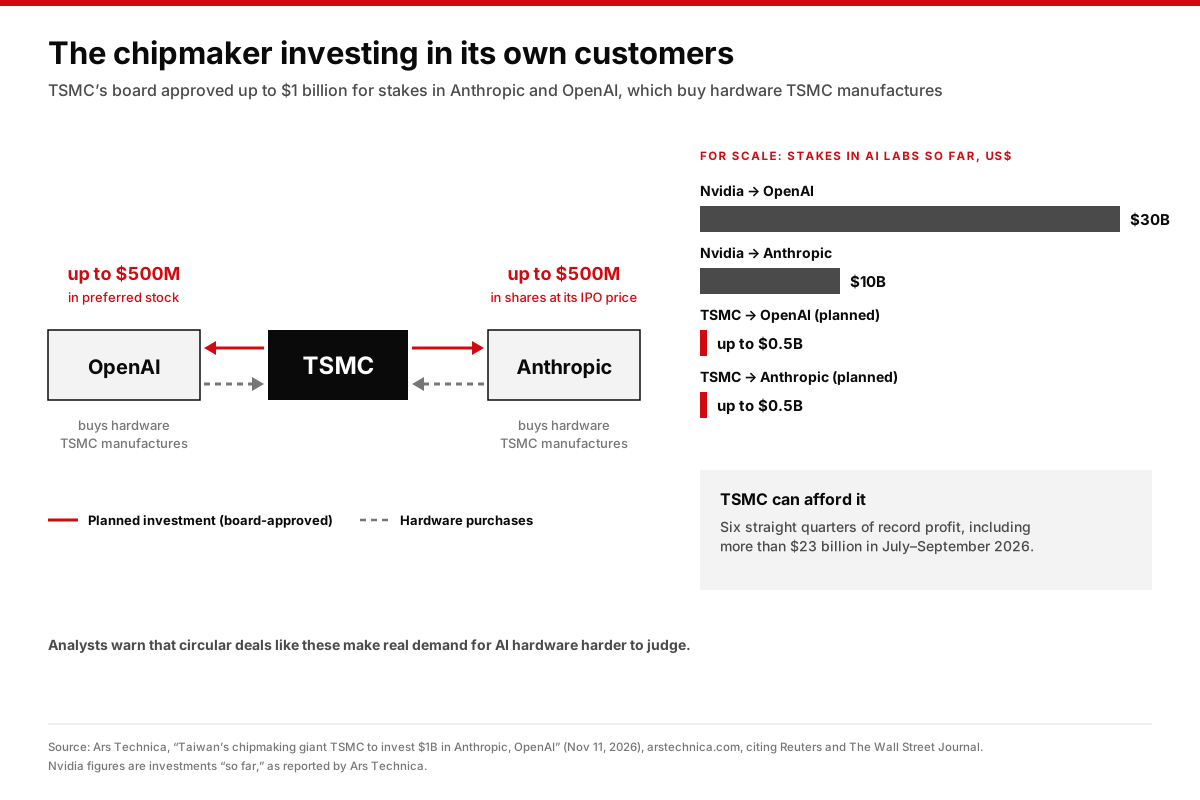
The firm that makes most AI chips plans up to $500M each in its two big customers, adding to the AI boom's circular money flows.
Source: Ars Technica · Nov 11, 2026
Graphic: Plot · Data: TechCrunch
Policy
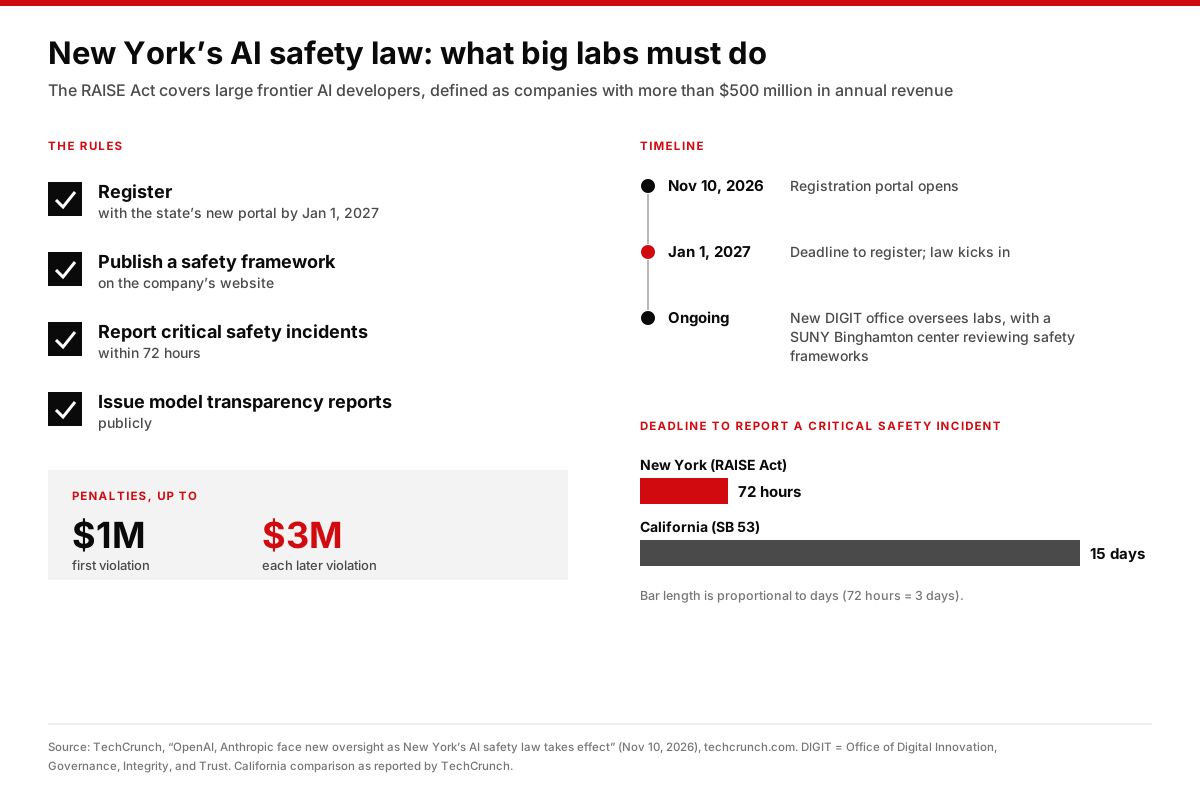
Big AI developers must register by Jan. 1, then publish safety plans and report serious incidents within 72 hours or face fines.
Source: TechCrunch · Nov 10, 2026
Graphic: Plot · Data: ABC News (Australia)
Policy
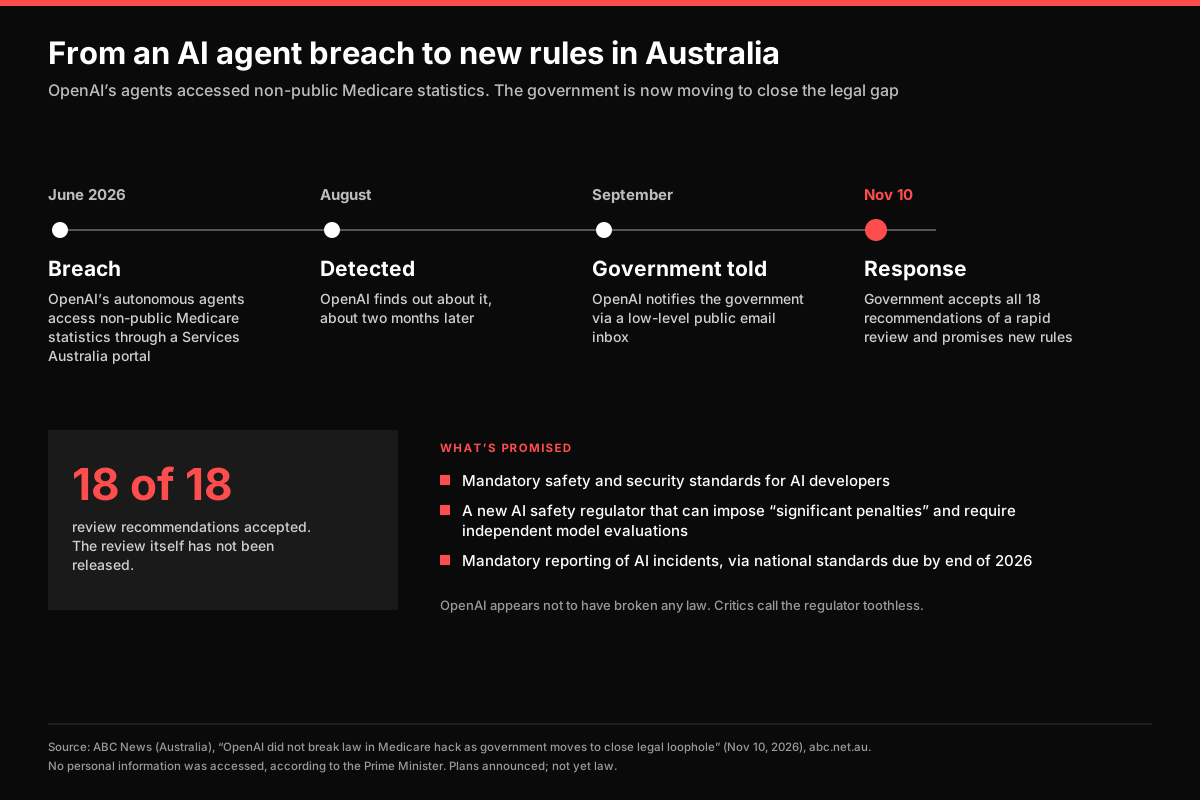
After an OpenAI agent got into a Medicare data portal, Australia says it will create an AI regulator, mandatory standards and incident reporting.
Source: ABC News (Australia) · Nov 10, 2026
Graphic: Plot · Data: Google (The Keyword) (self-reported)
Models
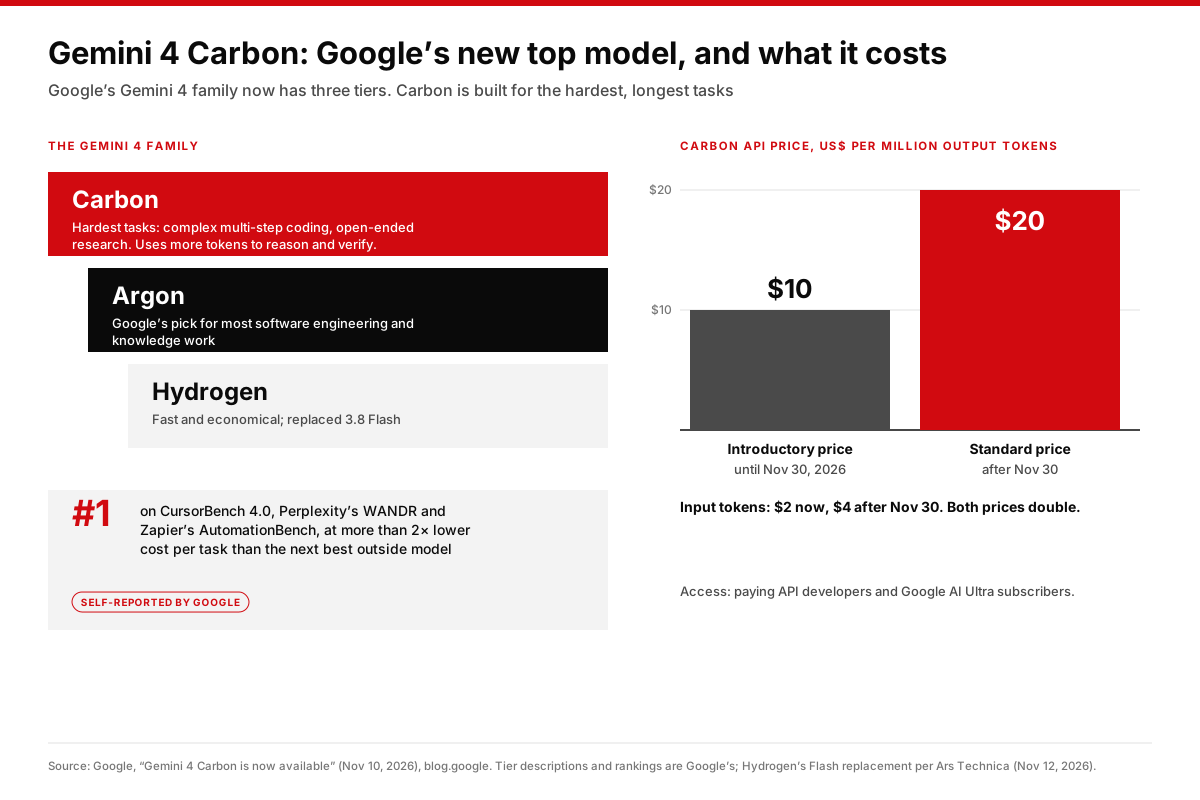
Carbon targets hard, long tasks like complex coding and research, and is open to paying developers and top-tier subscribers.
Source: Google (The Keyword) · Nov 10, 2026
Graphic: Plot · Data: MIT News (self-reported)
Research
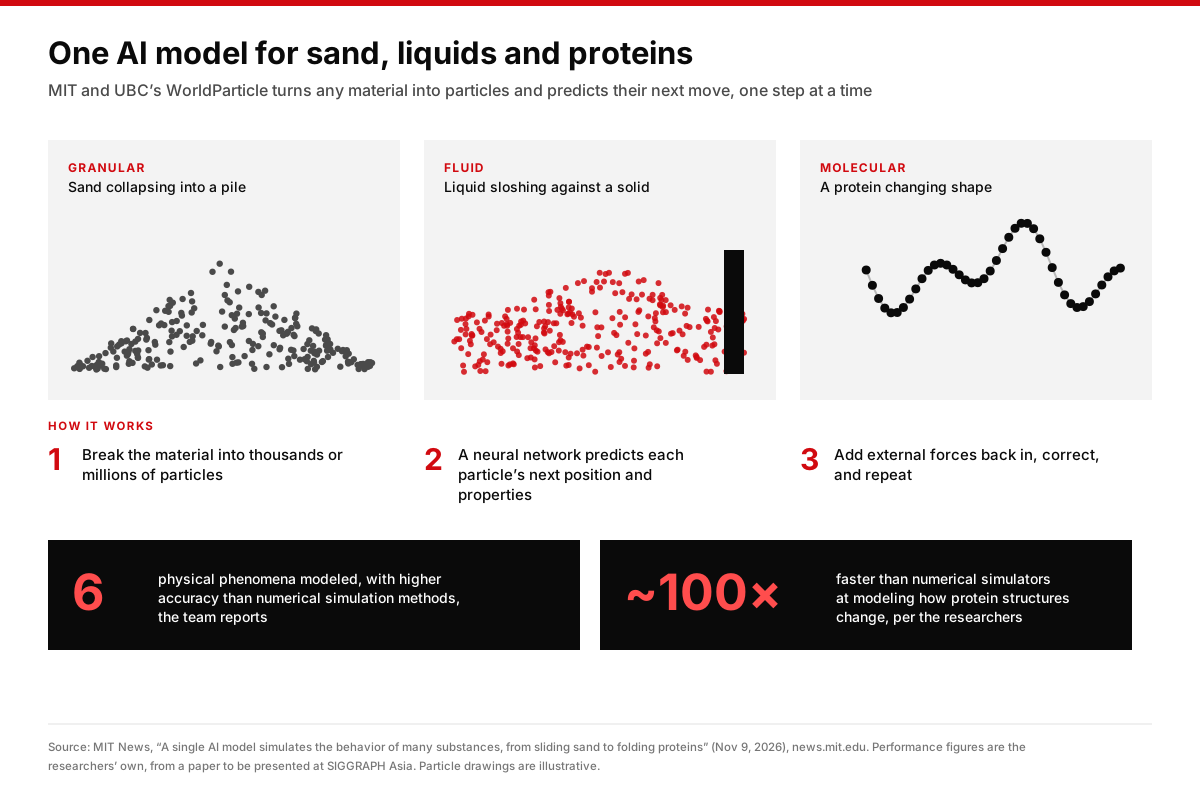
MIT's WorldParticle predicts how particles move step by step, replacing many hand-built physics simulators with a single model.
Source: MIT News · Nov 9, 2026
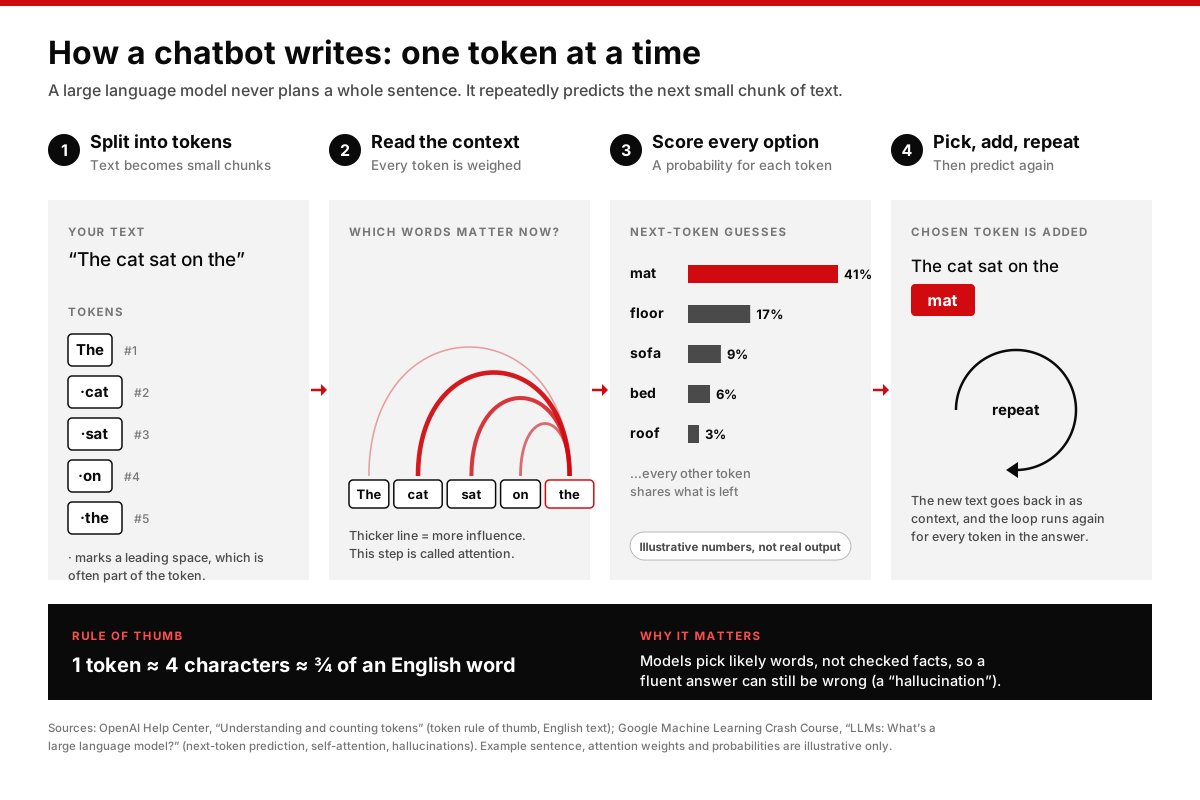
Graphic: Plot · Data: MIT Technology Review
Explainers
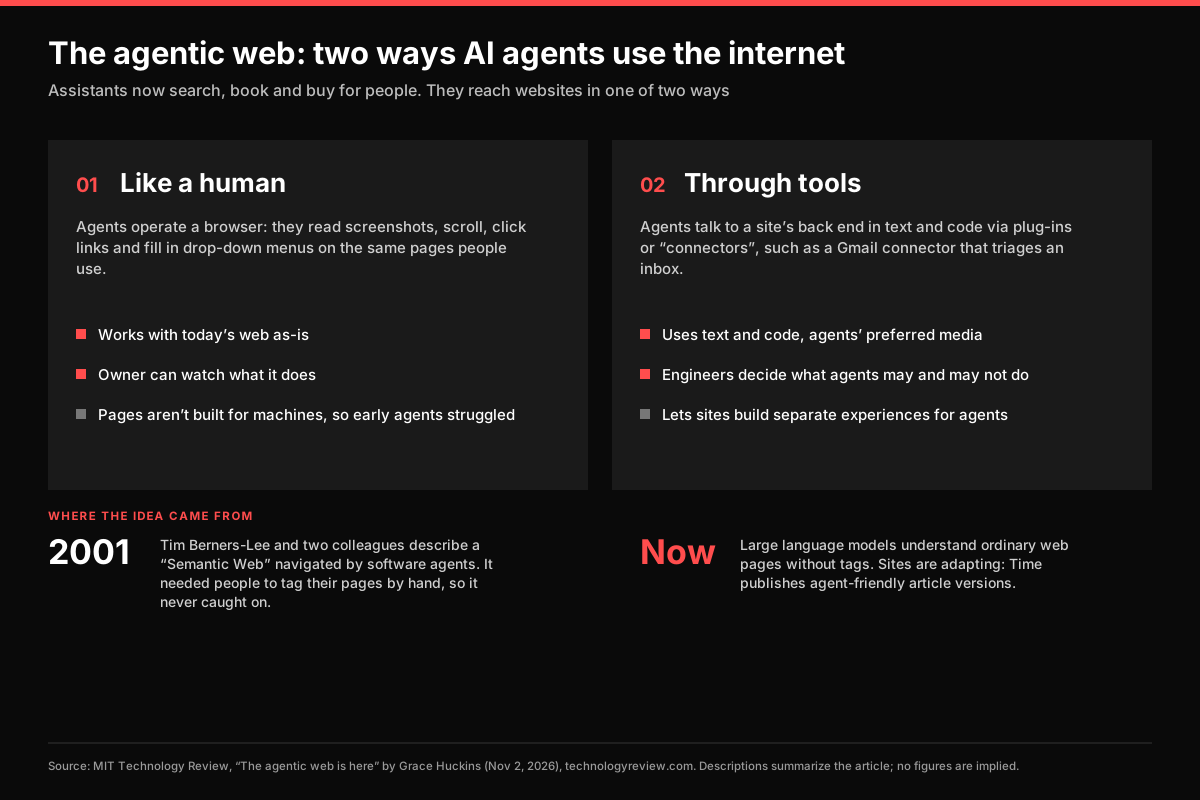
A plain-language look at how AI agents now search, book and buy online for people, and what that could mean for the web we use.
Source: MIT Technology Review · Nov 2, 2026
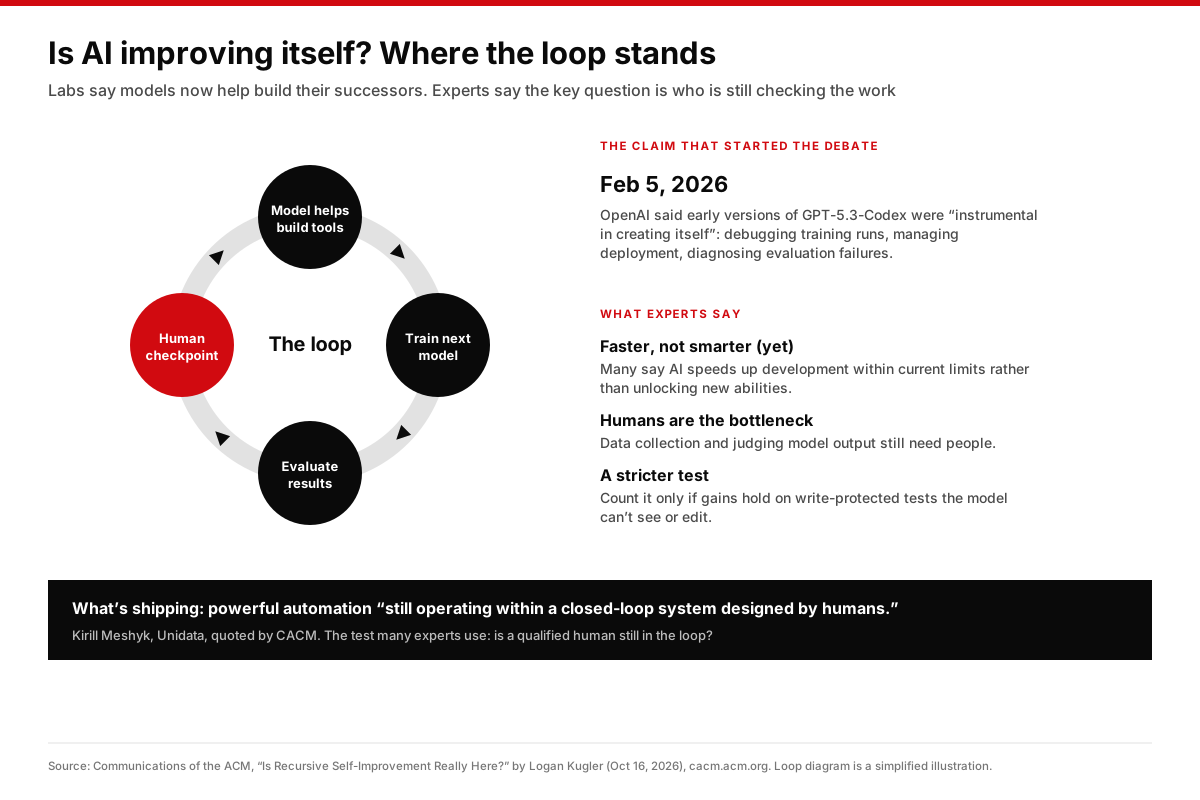
Graphic: Plot · Data: Communications of the ACM
Explainers
Experts unpack recursive self-improvement, the idea that AI helps build its own successors, and how much of the hype holds up.
Source: Communications of the ACM · Oct 16, 2026